You don't need to be a mechanic to catch the cheap problems before they turn into expensive ones. Here are the five things we wish every customer did once a month in their own driveway — each one takes a few minutes and can save you a tow, a breakdown, or a much bigger repair down the road.
Why monthly checks matter
Most of the big-ticket failures we get called for didn't start as big problems. They started as a slow leak, a soft tire, a slightly low fluid level, or a noise the owner had been hearing for a while and tuning out. The car was telling them something for weeks before it stopped running.
A ten-minute walkaround once a month is the cheapest preventive maintenance there is. You don't need any tools beyond a paper towel and a tire-pressure gauge, and you don't need to know what's under any of the covers. You're just looking for changes.
1. Check the engine oil
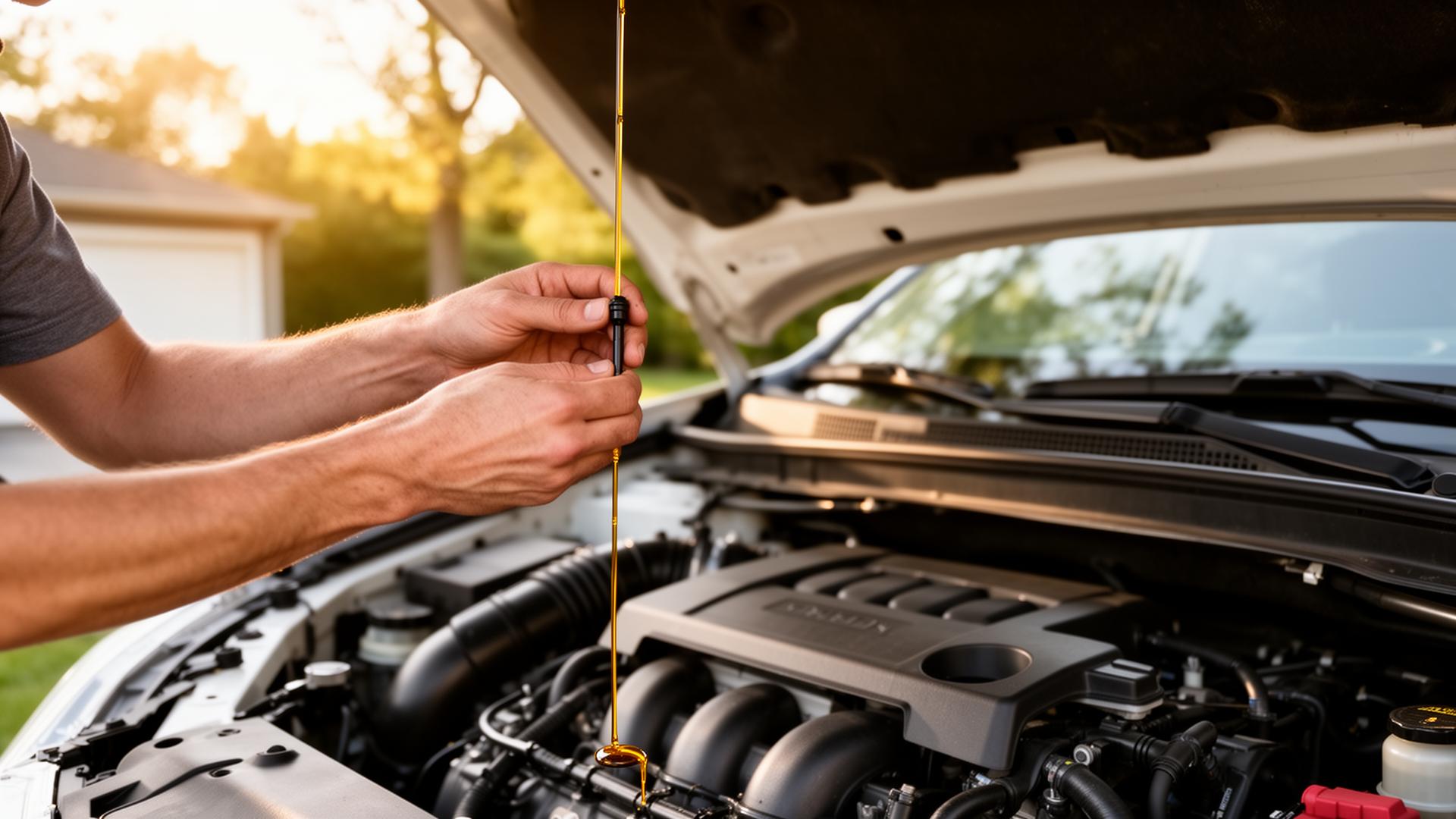
Park on level ground, let the engine sit for at least a few minutes after shutdown so the oil drains back to the pan, then pop the hood and find the dipstick. Pull it, wipe it clean with a paper towel, push it all the way back in, and pull it out a second time — that second reading is the accurate one.
Oil level should sit between the two marks on the dipstick. The oil itself should look amber to light brown on a newer service, or darker brown on an older one. What you do not want to see: gritty black, milky tan (a sign of coolant getting into the oil), or a strong burnt smell.
Modern engines, especially turbocharged ones, can quietly consume oil between services. Low oil is one of the easiest ways to damage an engine, and it almost never sets a warning light until the level is already critically low. Checking monthly is how you catch it.
2. Walk around the tires
Eyeball each tire for obvious low pressure, then check the actual pressure with a gauge when the tires are cold (sitting for a few hours, not just back from a drive). The correct pressure for your car is printed on a sticker in the driver's door jamb — not on the tire sidewall. The sidewall number is the maximum the tire is rated for, not the pressure your car was designed to run.
While you're down there, look for uneven wear across the tread. Wear on just the inside or just the outside edge usually points to alignment or worn suspension components. Wear in the center or on both edges usually means the tire's been running over- or under-inflated for a while. A bulge on the sidewall is a tire that should not go back on the road.
Also check tread depth. The classic penny test — Lincoln's head upside-down between the tread blocks — tells you if you've reached the legal minimum. By the time it gets that low, traction in rain is already noticeably worse.
3. Walk around the lights
Park facing a wall or a garage door, turn the headlights on, and check both low and high beams. Walk around to the back, have someone press the brake pedal, then cycle the turn signals and reverse lights. A single burned-out bulb is cheap and easy. A burned-out brake light is also one of the most common reasons people get pulled over.
On newer cars with LED light bars, individual segments can fail without setting any dashboard warning. The only way to know is to look.
4. Peek under the car after it's been parked overnight
After your car has sat in the same spot overnight, take a quick look at the ground underneath. A few drops of clear water near the front passenger area is normal — that's air-conditioning condensation. Anything else is worth a closer look.
- Bright green, orange, yellow, or pink fluid — engine coolant
- Dark brown or black with a slick, oily feel — engine oil
- Red or pink with a slightly sweet smell — automatic transmission or power-steering fluid
- Clear and slightly yellow with a thin, slippery feel — brake fluid (treat this as urgent)
- Dark and gear-oily smelling near the rear axle — differential or transfer-case fluid
5. Listen for new sounds
The best diagnostic tool you have is your own memory of how your car normally sounds. New squeaks, clunks over bumps, a whine that changes with engine RPM, a chirp at startup, a hum that builds with speed, or a brake squeal that wasn't there a week ago are all worth booking a quick diagnostic for.
Catching a worn serpentine belt, a loose heat shield, a tired wheel bearing, or a glazing brake pad before it fails is almost always cheaper than the repair after it fails — and avoids a roadside breakdown.
Bonus: the under-hood quick look
While you have the hood up to check the oil, take ten extra seconds to glance at the obvious stuff: the coolant reservoir level, the brake-fluid reservoir level, the power-steering reservoir if your car still has one, and the windshield washer fluid. Most reservoirs have MIN and MAX lines printed right on the plastic.
You're not trying to service anything — you're just looking for the level dropping faster than it should, which is how you catch a slow leak before it becomes a hot engine or a soft pedal on the highway.
When monthly checks turn into a service call
If any of the monthly checks turn up something worth looking at — fluid you can't identify, a warning light that won't go off, a new noise that's getting worse — we can come to your driveway, take a look, and tell you whether it needs immediate attention or can wait. We serve Raleigh, Durham, Cary, Chapel Hill, Apex, Wake Forest, Garner, Fuquay-Varina, Holly Springs, Clayton, Knightdale, Morrisville, Wendell, and Rolesville.