Brakes are one of the few systems on your car where guessing is expensive — and dangerous. Here's exactly how we decide what needs to be replaced when we get under your wheels in your driveway, and why we replace rotors instead of resurfacing them.
The two parts doing the work
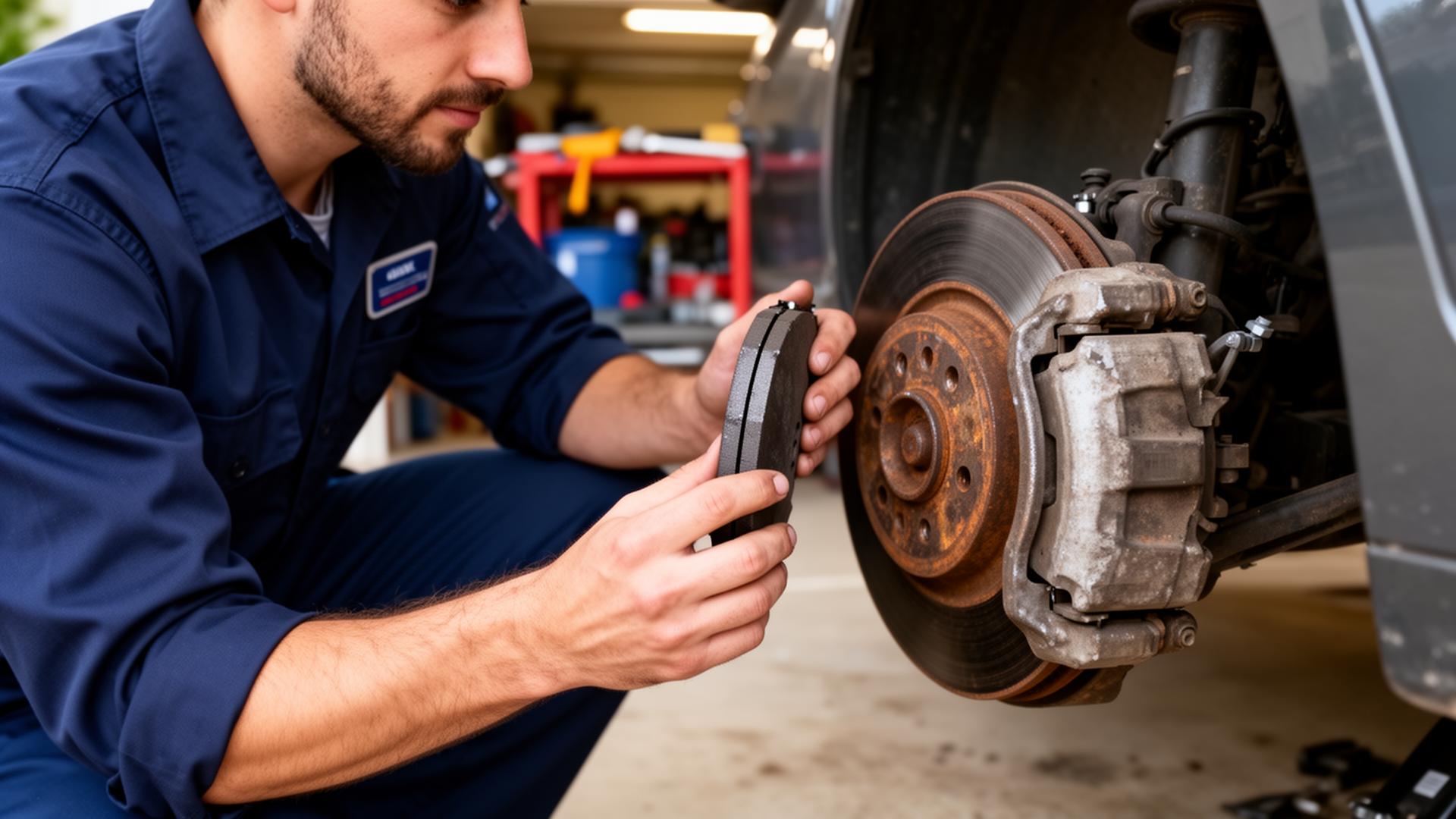
Your brake pads are the consumable. They are designed to wear down over thousands of stops. The rotor is the metal disc the pads clamp onto. Every time you brake, the pads bite the rotor, friction slows the wheel, and a little material comes off both parts.
Pads wear faster than rotors, but rotors are not infinite either. Heat, corrosion, hard stops, and uneven pad transfer all take metal off the rotor surface over time. The question every brake job comes down to is: are the pads worn but the rotors still healthy, or have the rotors been damaged, grooved, or worn past the manufacturer's stamped minimum thickness?
Getting that answer right is the difference between a routine maintenance item and a repeat brake job six months later.
How we measure your brakes in your driveway
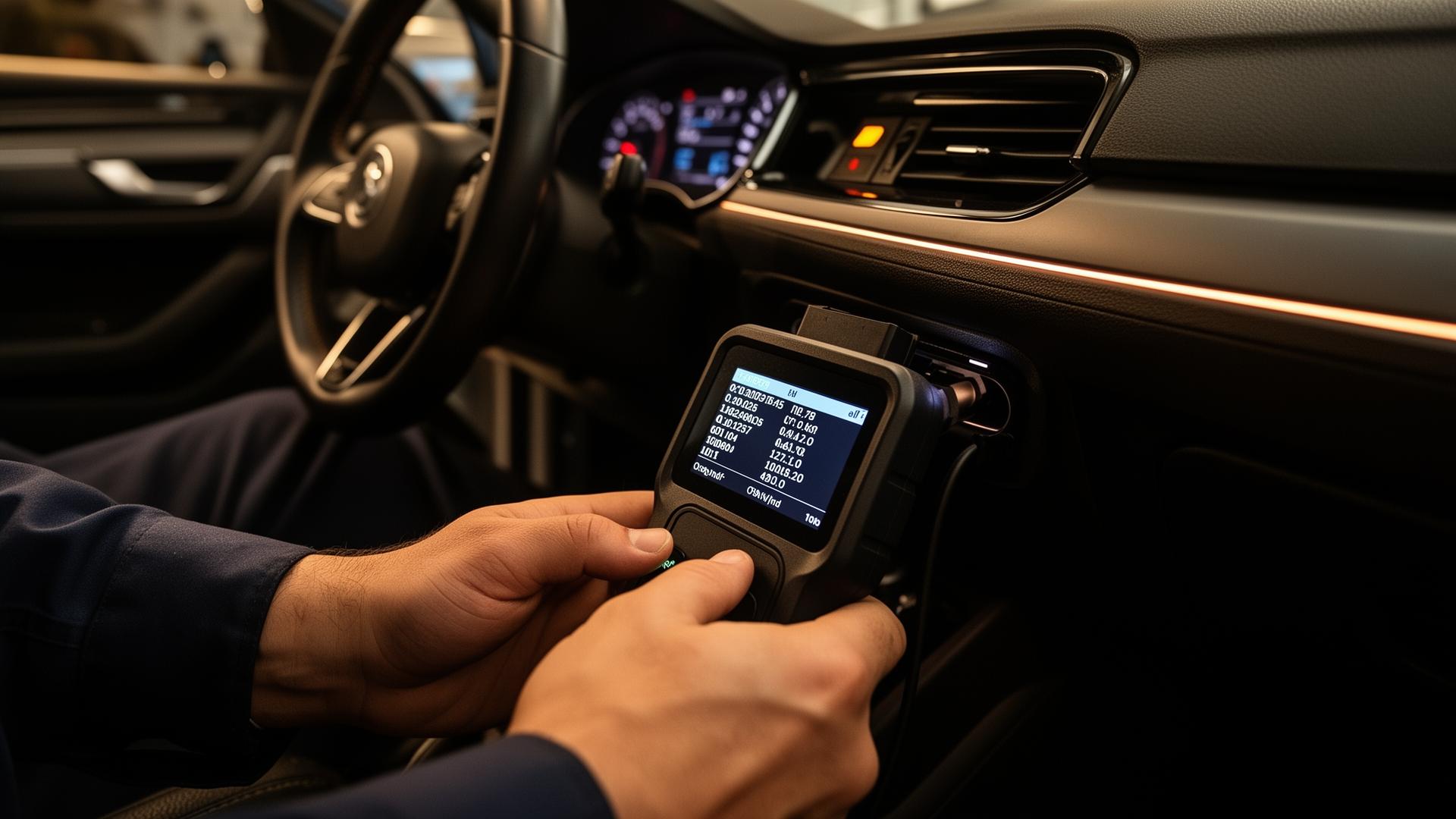
When you book a mobile diagnostic, pad and rotor measurements are part of the visit. If you skip the diagnostic and book a brake job directly, we still take measurements before ordering parts, so you only pay for what the car actually needs.
- Pad thickness measured with a brake gauge at the thinnest visible edge of each pad
- Rotor thickness measured with a micrometer and compared to the minimum stamped on the rotor itself
- Rotor surface inspected for deep grooves, hot spots, blue heat discoloration, cracking, and lip wear at the outer edge
- Rotor runout checked when a customer reports pulsation through the pedal at highway speed
- Caliper slides, pins, and pistons checked so new pads sit square and wear evenly
- Brake hoses and hardware inspected for cracking, swelling, or corrosion
- Brake fluid checked for moisture content — old fluid lowers the boiling point and softens the pedal
When pads alone are enough
If the rotors are still well above the minimum thickness, the surface is smooth and even, and there's no pulsation or pulling, a pad-only replacement can be the right call. That tends to be the case on cars caught early — usually when the pad-wear sensor or audible squealer just started going off.
Even then, we'll sand and clean the rotor surface so the new pads bed in properly. Slapping new pads onto a glazed or contaminated rotor is how people end up with squeaks and uneven wear two weeks after a brake job.
When pads and rotors both need to come off
Rotors get replaced when any of the following show up during the inspection.
- Rotor thickness is at or below the manufacturer's stamped minimum
- Deep grooves you can catch a fingernail in
- Visible cracking, especially radial cracks from the hub outward
- Heavy lip wear at the outer edge, which prevents new pads from sitting flat
- Hot spots or hard blue-black discoloration from extreme heat
- Pulsation through the pedal at highway braking — usually rotor thickness variation or warping
- Pads were driven down to the backing plate, which scores and chews up the rotor surface
Why we replace rotors instead of resurfacing them
Older shops resurface rotors on a brake lathe to save the customer money. We don't, and that's a deliberate choice. Modern rotors are made significantly thinner than rotors from twenty years ago. By the time a daily-driven car comes in for its first or second brake job, the rotors are often already close to the minimum thickness stamped on them.
Cutting more metal off a rotor that's already near minimum shortens its remaining service life, raises its operating temperature (less metal means less ability to absorb heat), and makes it more prone to warping. We've also pulled plenty of recently-resurfaced rotors off cars that came back with the exact same pulsation complaint they were trying to fix.
Replacing rotors as a set with new pads gives you a fresh, dimensionally correct surface, a clean pad bed-in, predictable braking feel, and the longest interval before the next brake job. That's why it's our standard.
What about brake fluid?
Brake fluid is hygroscopic — it absorbs moisture from the air over time, even with the system sealed. As moisture builds up, the boiling point drops, the pedal gets softer, and internal corrosion can shorten the life of calipers, ABS hardware, and master cylinders.
Most manufacturers recommend a brake fluid service every two to three years. We test fluid moisture content with a tester during inspections and recommend a fluid flush only when the results call for it.
Signs it's time to book a brake check
- Squealing that goes away when you press the pedal harder — that's the pad-wear indicator letting you know you're getting close
- Grinding or scraping — metal is touching metal, the rotor is being damaged, and you should not keep driving on it
- A pulse or shudder through the pedal when you brake from highway speed
- The brake warning light or the ABS light on the dashboard
- Pulling to one side when you stop — often a sticking caliper or collapsed hose
- A spongy pedal that travels further than it used to before the car begins to slow
- Burning smell after a single hard stop or after coming down a long hill
How a mobile brake job works
For a brake replacement at your home or office, we bring everything to you: pads, rotors, hardware, tools, and a fender cover so we don't scratch your paint. The typical front-axle pad and rotor job takes a couple of hours; a full four-wheel service takes about half a day. You don't have to wait in a lobby, and the car stays where you parked it.
We serve Raleigh, Durham, Cary, Chapel Hill, Apex, Wake Forest, Garner, Fuquay-Varina, Holly Springs, Clayton, Knightdale, Morrisville, Wendell, and Rolesville.